An article on chambers of torture in Italy… Well, you may have noticed thatÌýwe atÌý±ô¾±´Ú±ð¾±²Ô¾±³Ù²¹±ô²âÌýhave been digging Halloween. Actually, it’s more than that: we are really enjoying the atmosphere of the months of October and November, when mystery and spooks go hand in hand not only because of Halloween, but also because of feasts such as All Saints and All Souls, truly rooted in Italian tradition, and themselves prone to create a certain feelingÌýof pleasurable dread, especially in children.
We would like to keep you company this month and the next, with some articles about topics that seem particularly apt at keeping up with the spooks and horrors ofÌýthis time of the year, peppering our words with some history and culture, so that by reading us you will not only fulfil your daily need for blood curdling tales, but also learn something new about the fairest of countries, Italy!
So, let us begin, with a fearful historical trip into some very interesting places of torture in Italy, which can be truly counted as bona fide, dreadful chambers of horror…

A Brief History of Torture in Italy
Before describing and discussing the scariest and creepiest places of tortureÌýin Italy, let us create some background to, well… the discipline.
It really seems that torture is as old as the history of Man: its first signs appear within one of the most advanced of all ancient civilization, the Egyptians, who would use methods of punishement as flogging and beatings with sticks to scare, punish of force a confession out of the victim. However – and it is here thatÌýItaly comes into the picture – it was really with the Romans that things took a turn for the worst: it is certainly not a case that the very termÌýtortureÌýcomes from the latin verbÌýtorqueo, which means to twist one’s body.
In Rome, torture was inflicted, at least initially, to slaves, but it spreadÌýeventually, during the Empire,Ìýto all forms of enemy and criminals. It became, in fact, an entirely legal instrument, often used to force a confession, which was necessary, according to Roman law, to formulate a conviction. Flogging using a whip with multiple ox-leather strands was the most common method, even though fire branding was also very popular. Under Constantine (306-337), forcing melted lead in the throat of aÌýcriminal was a commonly used as aÌýpunishment. And, of course, we cannot forget the most famous of all Roman torture methods: crucifixion, which would bring, eventually, to anÌýexcruciating dea³Ù³óÌýcaused byÌýdislocation of the limbs and suffocation.
So, yes: the Roman were certainly on top of their game when it came to inflicting pain, but with the dawn of the Middle Ages, things got worseÌý(or better, depending on the point of view, of course). After centuries during which the main legal systems used in the country were those of “barbaric” populations (who, it may be interesting to note, did not employÌýtorture), the 12³Ù³óÌýcentury saw the renaissance of Roman Law, which also brought torture back into legality. Torture so, just as it had happened during Imperial dominion, was employed both as a punishment and to extort confessions. Techniques were varied, but the most common wasÌýthe rope, through which the victim would have his or her wrists tied with a rope, through which the body was lifted into the air and then let fall to the ground from various heights, causing the dislocation or the breaking of limbs and bones. Hot tongs were used to rip flesh and water was often forced down a victim’s throat in enormous quantities, to the point of not only causing discomfort, but also the potential burst of internal organs and, as a consequence, death.

Truth is, however, that up to the 16³Ù³óÌýcentury, torture in Italy was practiced only seldom and only forÌýspecific cases, first among them, to punish heretics. And it was, in fact, against heresy, that torture in Italy (and in the world) became commonly used. It was, as we said, the 16³Ù³óÌýcentury, and torture became an everyday event through the hands of the Holy Inquisition. The Roman and the Spanish Inquisitions were possibly the thirstiest for blood: between 1542 and 1761, for instance, the Roman Inquisition sentÌýto the stake 97 people, including the enlightened philosopher Giordano Bruno, today considered a father of human modern thought, as well as Galileo Galilei, who saved himself because accepted to deny his beliefs (namely, that the Sun, not the Earth was Ìýat the centre of the Solar System).
Things started to change with the inception of Illuminism. Cesare Beccaria, in h¾±²õÌýTrattato dei Delitti e delle Pene,Ìýcondemned torture as a too cruel and ultimately useless method. The first country in Europe to repudiated torture was Prussia, in 1740. Shortly after, in 1789, the success of the French Revolution underlined the essentiality of human rights, even for those individuals suspected of a crime. However, protecting the State won over ideals and, shortly aftewards, in the 1800s, France started to use, albeit in secret, torture again.
The 20³Ù³óÌýcentury was the century of the World at War: no wonder thenÌýthat torture was employed largely and with horrific results. This is so close to us in time and space, it may not need to be discussed: we may just need to take up again one of our High School history books, or watch the Discovery Channel and the news to remind ourselves of how close these actions are, still, to us.
The Most Common Forms of Torture
We read that torture has a long history, but certainly it was in the Middle Ages that it enjoyed its heyday. Some of the most common Medieval torture methods were inventive and certainly scary to think of. Let us take a look.
Tying: this form of torture was used especially against women and gipsies: their long hair were tied to a large pole, which was then turned around. The excruciating pain caused by it was only the beginning, as often the entire scalp was actually ripped off the victim’s skull.
The Virgin of Nurnberg: one of the most famous of all Medieval torture instruments, also known as theÌýiron maidenÌý(yes, thatÌý¾±²õÌýÌýwere the band took their name). The victim was forced to enter a sarcophagus-like box, entirely covered with blades. When the sarcophagus was closed, the victim was pierced throughout and died a slow and painful death by blood loss.

The Wheel:Ìý³Ù³ó±ðÌý°Â³ó±ð±ð±ôÌýwas used in the Middle Ages as a capital punishment method. The criminal was tied, his face looking up, to a wheel, while the executioner would beat him or her up with a heavy stick, breaking all the bones in the body.ÌýVery often, the last, fatal blow was inflicted out of mercy upon the victim’s breast bone, a quick way to certain death.
Crucifixion:Ìýpossibly the best known form of torture, it was particularly popular in Roman times. As we all know, the victim had his feet and hands nailed to a cross, which was often placed upside down (Saint Peter was, in fact,Ìýcrucified this way).
Boiling:Ìýyes, you read it right. In the Middle Ages, you did not only boil your vegetables, but also people. The victim was placed in a large container and literally boiled to death.ÌýThe end would come slowly and painfully indeed.
Skinning:Ìýthe victim was decorticated while still conscious and vigilant. There is not much to add to this description. Ouch.
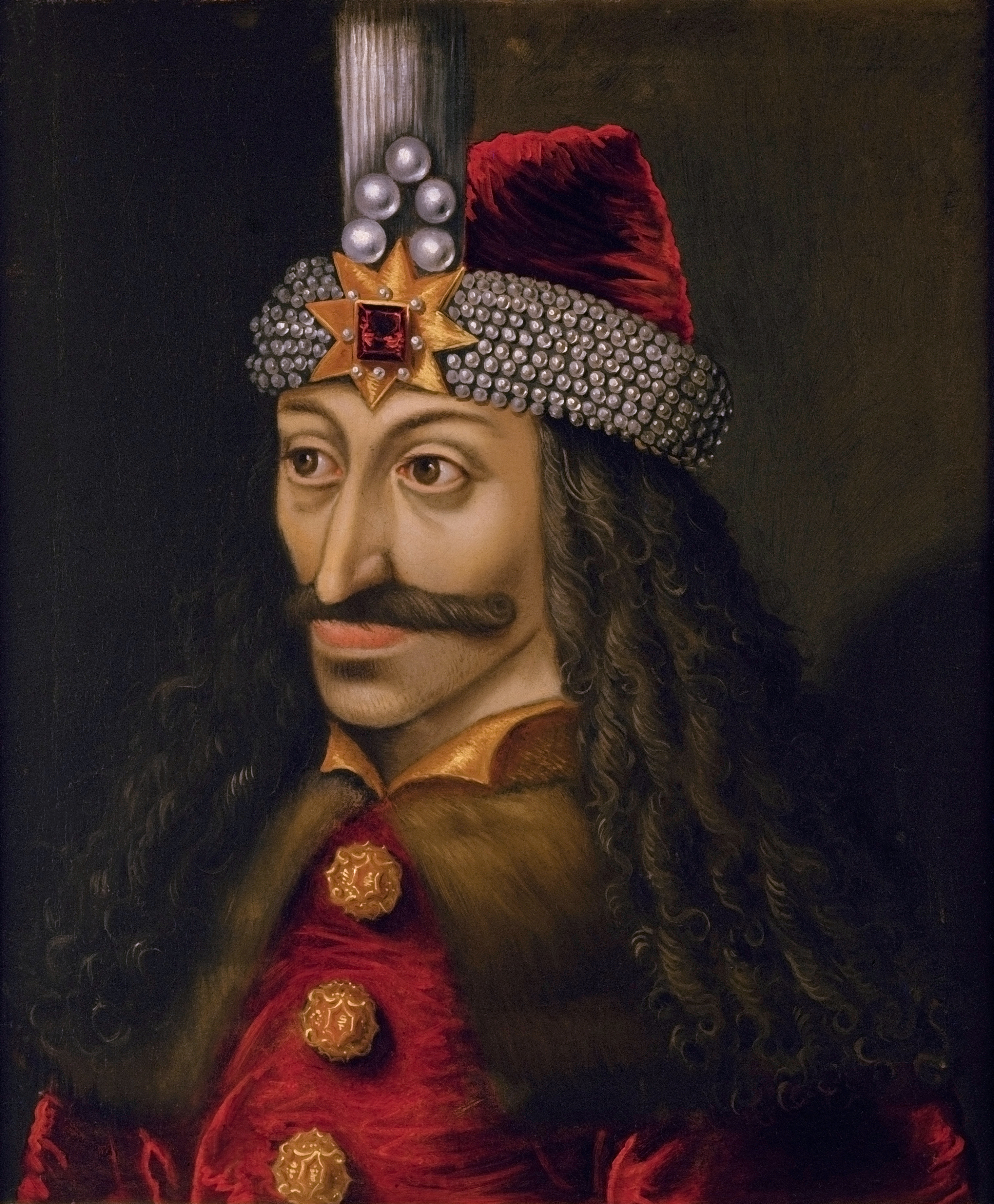
Impaling:Ìýmade famousÌýby the historical figure that inspired Bram Stoker to create h¾±²õÌýDracula,Ìýthe Count Vlad III of Walachia, this torture form consisted in placing a sharp pole in the victim’s rectum, then forcefully pushing it out of his or her mouth or skull. Certainly one of the most gruesome and painful forms of torture.
The Most Gruesome Places of Torture in Italy
Because of the presence of the Roman Empire first and the Inquisition then, torture in Italy has been certainly largely practiced. After our brief historical excursus on the development and types of torture forms, we may now take a better look at actual places of torture in Italy, some of which you can visit, too, in case you are interested and would like to add a morbid thrill to your vacation.
Cesena and theÌýÌý
The building, which went through several reconstructions and whose appearance today is that of its last modification, wanted by Galeotto Malatesta in 1380, is not only known for its historical role as an essential post of the Malatestas’ power, but also because, within its walls, there are some spooky rooms. If you walk through its corridors, you will come across one in particular, calledÌýIl Corridoio del PozzoÌý(the corridor of the well), so called in name of a grill along its walls which overlooks what is thought to be the infamous Pozzo dei RasoiÌý(the well of blades). This was a well filled with sharp razor-like blades, where victims were thrown and suffered a slow, painful death. A less horrifying use of the well has been advanced, too: it may have been the entrance to a secret passage used to escape from the castle in case of attack. Truth is, neither of the versions has been proven, so the doubt – and eerieness – remains.
You may be glad to know this is not the only scary place of torture within the walls of this famous Malatesta’s residence. Another corridor here is aptly namedÌýCorridoio dei FantasmiÌý(the corridor of ghosts), which has been, so it is said, background to several paranormal events. From it, visitors can accessÌýa semi-circular room, called la Sala delle TortureÌý(the hall of tortures). This room is entirely underground, so that the screams of its guests could not be heard.
Scary and spooky indeed.


TheÌýAbbazia di San MercurialeÌýand theÌýPiazza delle Esecuzioni ÌýCapitaliÌý(¹ó´Ç°ù±ôì)
, in Forlì, was once outside of the town walls, nearÌýthe Christian cemetery. Today, however, the abbey is located at the very heart of this Romagna town, inÌýPiazza Saffi.ÌýThe abbey is remembered as the location of medieval executions, during which hundreds of people would gather to assist to the deadly spectacle. It was not unusual – and not only during the Middle Ages, but also inÌýmuch more recent centuries – to consider executions as a fun moment to witness. Authorities also felt that takingÌýpart to an execution as a spectator may be an edifying moment for the citizens, faced by the inevitable end of those who refused to follow the law.
We may like to mention that, up to the 18³Ù³óÌýcentury, when theÌýguillottineÌýwas invented, executions were carried out with an axe, which made for a less thanÌýclean way to kill.ÌýIt was essential, to avoid excessive suffering to the criminal, to severe the head with one single, sharp strike. Needless to say, this failed to happen most of the time, which made for some extra shedding of blood and suffering very much enjoyed by the public, always happy to seeÌýsome moreÌýgore. Apparently, some Tommaso di Ser Filippo received 14 (yes, fourteen) axe strikes before dying and anotherÌýunfortunate, a certain Brunini, had to be finished with a knife: this particular case was so ugly that people ran away in disgust from it. If you are travelling in the area and enjoy this type of thing, Forlì offers aÌý,Ìýwhich also touches the area of the Abbey.

The Church ofÌýSan DomenicoÌýinÌýFerrara
Always in Emilia Romagna is the beautiful city of Ferrara, home to the powerful medieval family of the Este. In it, is the church ofÌýSan Domenico,Ìýconsidered the “church of the Inquisition” in the city. Ferrara has kept track religiously (it is really the case of using this adjective) of all those sentenced to death during the years of the Inquisition: theÌýLibro dei Giustiziati, the book of the executed, is kept in theÌýBiblioteca Ariostea di Ferrara. The document contains more than 850 names. There is something peculiar about the book, though: persecution was mostly active against heretics and the most famous of them all were certainly witches. However, only 22 of the 853 names in the book are females. In the end, the Ìýmajority of the heretics and criminals were, indeed, men.
The Church ofÌýSan Giorgio in LemineÌýinÌýAlmenno San SalvatoreÌý(Bergamo)

We are now in Lombardia, more precisely in the province of Bergamo. This church, located in a relatively isolated countryside area, became famous in the 15³Ù³óÌýcentury for the presence of a confraternity called i Disciplinati,Ìýliterally the disciplined, who dedicated themselves to prayer and self punishment. Self punishment very often took, in those centuries, the same form and shape of torture: flogging was among the most common practices followed by theÌýDisciplinati. Apparently, their aim was not only expiating their sins through physical pain, but also heighten their perception of God and Christ by experiencing in first person the same physical pain He endured. The place where this self inflicted form of torture was usually carried out was, indeed, the porticoÌýof this church, today no longer extant. However, we are pretty sure eerie vibes and fearful sighs are still audible, if you pay close attention.
Another place were this confraternity practiced their rituals was at theÌýOratorio dei Disciplini, in Clusone, always in the Bergamo province of Lombardia.

Church of San Marco in OsimoÌýand theÌýPozzo delle Lame
Another place of tortureÌýis inÌýOsimo, near the city of Ancona, in the Marche region of Italy. Here, theÌýChurch of San MarcoÌýis said to have once been the unfaithful location of aÌýpozzo delle lame,Ìýa well of blades just as the one mentioned in relation to the Rocca Malatestiana of Cesena, where people would be thrown to be tortured and, after a long agony, would eventually die. (Un)fortunately, thereÌýno longer is any physical evidence of the well, as the church went through several rounds of renovations throughout the centuries. However, documentation seems to show it used to beÌýin the underground cells that used to be located underneath the sacresty.
TheÌýCastello di SpilambertoÌý(MO)
Back in Emilia Romagna, and more precisely in the Modena province, is the , a 13thÌýcentury fortress, adapted to residence in the 15th. There is a tiny room, in this castle, whose story and discovery could well make it in the plot of a chilling horror movie. During the 1940s, the residence underwent some restoration works and it is only then that builders came across a smallÌýroom, walled andÌýhidden under the main stairs of the castle’s tower. Its existence was unknown to the owners. The minuscule cell, only about 1 metre and half in length and width and reaching 2 metres only at its highest point (in feet, we are talking about 4 feet in length and width and 6 at its highest), was very likely used as a prison and a torture chamber. What happened within is not known, but the size itself seems to be a form of torture enough. The four walls of the cell are covered in drawings and writings of its inhabitant: a man called Filippo il Diavolino, very likely inprisoned there because of a woman. He, it seems, spent three to four months segretated hereÌýand wrote his story with, you guess it, his own blood.
La Stanza dei Tormenti di Narni, Umbria

Narni is a lovely town in the hilly central ItalianÌýregion of Umbria, known for aÌýrecent discovery, imbued in mystery, that well fits into our discussion onÌýplaces of torture in Italy.ÌýIn 1979, six members of the village speleological group found, under the remains of an ancient Dominican convent, a wall with a small passage covered with debris and bushes. Excavations began and, after 15 years of work, the once secret underground maze of Narni was finally open to the public.
One of the chambers discovered is a 12th century chapel dedicated to SaintÌýMichael, which has been consecrated again in 2000. Nearby is an even older room, carved directly into live stone, which turned out to be a Roman water cistern.
It is, however, behind a small, walled door, that the most disturbing of the discoveries was made: behind the door, a long corridor lead the first visitors to a large hall, whose name, la stanza dei tormenti (the chamber of torments) has been found in the documents related to this monastic complex kept in the Vatican Archives. From the room, a tiny door enters a small, claustrophobic cell, were prisoners were kept, awaiting their destiny of torture, its four walls covered in words, sentences and graffiti, witness to the pain and the fear of an unknown number of people. It is thanks to these graffiti that we know today that particular cell – and we believe, the torture chamber annexed to it– was used especially for the prisoners of the Inquisition.
Another frightening story to tell on Halloween night, right?
Throughout its history, Italy has been home to places of torture where evils of such magnitude took place that their painful energy can still be breathed in. Those we mentioned in this article are open to the public and certainly make for a thrilling adventure, as well as an interesting socio-historical sight. Places of torture in Italy all belong to the past, as weÌý know that, luckily enough, inflicting pain as a form of punishment or extortion is no longer legal in the western world. However, we are well aware it is not soÌý in many other parts of the world, and we only need to tune on the news to hear about it.
To us, it may be even more frightening, though, the idea that torture per se, has happened in Italy and Europe to unconceivable extent not much longer than 70 years ago, during the last World War.
May visiting places of torture from a distant past, in Italy, as in any other country, not only provide a thrill to us, but also help us to remember how close pain and injustice still truly are.
By Francesca Bezzone


